A comparison guide to contraception methods


If you’re looking for the best way to prevent pregnancy, you might be surprised by just how many contraception options are available in the UK. You’ve got everything from daily pills and condoms to long-lasting implants and emergency contraception, and there’s no single method that’s right for everyone.
The best contraceptive method for you is whichever one fits your health, lifestyle, preferences and future pregnancy plans. Some people want a method they don’t have to think about for years, while others prefer something they only use when they have sex. There are also options if you’ve had unprotected sex and need emergency contraception.
This guide tells you everything you need to know about the main types of contraception methods available in the UK, as used for preventing pregnancy. Some contraceptive methods are also prescribed for other reasons, but for the purpose of this guide, we’re focusing solely on trying to prevent pregnancy from happening.
What is contraception?
Contraception is the name for the methods you can use to help prevent pregnancy. Different contraceptions work in different ways. Some prevent the release of an egg (ovulation), some stop sperm from reaching an egg, and others make it harder for a fertilised egg to implant in the womb.
No contraceptive method is 100% effective, but when you use them correctly, many types, such as the implant, daily pill and coil, are over 99% effective at preventing pregnancy. The best choice depends on factors such as your health, lifestyle, future pregnancy plans and whether you prefer a hormonal or hormone-free option.
Contraception methods at a glance
How well contraception works doesn’t just depend on the method itself – it also depends on how it’s used. Forgetting to take a pill, a condom slipping off during sex, or leaving a vaginal ring in for too long can all make contraception less effective. This is called typical use, and it reflects how contraception is used in everyday life.
The table below shows each method’s typical effectiveness and how effective it can be when used perfectly.
| Method |
Hormonal? |
Typical use effectiveness |
Perfect use effectiveness |
How long does it last? |
Protect against STIs? |
|---|---|---|---|---|---|
| Contraceptive implant | Yes | Over 99% | Over 99% | Up to 5 years | No |
| Hormonal coil (IUS) | Yes | Over 99% | Over 99% | 3-8 years (depending on type) | No |
| Copper oil (IUD) | No | Over 99% | Over 99% | 5-10 years | No |
| Contraceptive injection | Yes | Around 94% | Over 99% | 8-13 weeks depending on type | No |
| Combined pill | Yes | Around 91% | Over 99% | Daily | No |
| Progestogen-only pill | Yes | Around 91% | Over 99% | Daily | No |
| Contraceptive patch | Yes | Around 91% | Over 99% | Weekly | No |
| Vaginal ring | Yes | Around 91% | Over 99% | 3 weeks | No |
| Male condom | No | Around 82% | 98% | Single use | Yes |
| Female/internal condom | No | Around 79% | 95% | Single use | Yes |
| Diaphragm or cap | No (used with spermicide) | Unknown | 92 to 96% (estimate) | On-going | No |
| Fertility awareness methods | No | 76% | 91 to 99% (estimate) | Reusable | No |
| Female sterilisation | No | Over 99% | Over 99% | Permanent | No |
The data above has been taken from the NHS web page on how well different contraceptives work at preventing pregnancy.
What are the main types of contraception methods?
Contraception is often grouped into several categories:
- Long-acting reversible contraception (LARC)
- Short-acting hormonal contraception
- Barrier methods
- Natural family planning strategies
- Permanent contraception
- Emergency contraception
Each type works differently, and each has its own advantages and disadvantages.
Read on to learn more about each method.
What is long-acting reversible contraception (LARC)?
Long-acting reversible contraception (often called LARC) includes methods that provide reliable protection for months or years without needing daily attention.
These methods are among the most effective forms of contraception because there’s very little room for you to get things wrong.
Contraceptive implant
The implant is a small flexible rod inserted just beneath the skin of your upper arm by a trained healthcare professional.
It slowly releases the hormone progestogen, which works by preventing ovulation and thickening cervical mucus to stop sperm reaching an egg.
Key points on the contraceptive implant
- The contraceptive implant is over 99% effective at preventing pregnancy, making it one of the most reliable forms of contraception available.
- Once fitted, it provides continuous protection for up to five years, so you don’t need to remember a daily, weekly or monthly routine.
- If your plans change, the implant can be removed at any time by a trained healthcare professional.
- For most people, can return quickly after the implant is removed, making it a suitable option if you think you may want to become pregnant in the future.
- Because the implant contains only progestogen and no oestrogen, it can be a good choice for many people who cannot use oestrogen-containing contraception.
Hormonal coil (IUS, or intrauterine system)
The hormonal coil sits inside the womb and releases a small amount of progestogen.
It works by preventing you from releasing an egg (meaning there isn’t an egg to fertilise) and thickening cervical mucus, making the lining of the womb less suitable for pregnancy.
Key points
- The hormonal coil is over 99% effective at preventing pregnancy, making it one of the most reliable forms of contraception available.
- Depending on the type of hormonal coil you choose, it can provide protection for between three and eight years without you having to remember daily or monthly contraception.
- It is fitted by a trained healthcare professional during a quick appointment, and once it’s in place, you don’t need to do anything else to keep it working.
- If your circumstances change or you’d like to try for a baby, the hormonal coil can be removed at any time by a healthcare professional, with fertility usually returning quickly afterwards.
Copper coil (IUD)
Unlike the hormonal coil, the copper coil contains no hormones. It releases small amounts of copper, which affects sperm, making it difficult for them to survive and fertilise an egg.
Key points
- The copper coil is over 99% effective at preventing pregnancy, making it one of the most reliable contraceptive methods available.
- Because it doesn’t contain any hormones, it’s a good option for people who prefer or need to avoid hormonal contraception.
- Once fitted, it can provide continuous protection against pregnancy for between 5 and 10 years, depending on the type of device used.
- The copper coil is also the most effective form of emergency contraception and can be fitted within five days of unprotected sex to help prevent pregnancy while continuing to provide long-term contraception if you choose to keep it in place.
What are short-acting hormonal contraceptives?
These methods work well when they’re used correctly, but they require you to remember them regularly.
For information about the effectiveness of each type of short-acting hormonal contraceptive, refer back to Table 1.
The contraceptive pill
There are two main types of daily contraception pill:
Both work by preventing ovulation, although the exact mechanism depends on the pill.
Key points
- The contraceptive pill is a familiar and widely used method of contraception that is easy to access through NHS services and pharmacies.
- For most people, fertility returns quickly after stopping the pill, so it’s a good option if you think you may want to become pregnant in the future.
- You can stop taking the pill at any time if your circumstances or family planning goals change, giving you greater flexibility than some longer-acting contraceptive methods (which need to be removed by a trained healthcare professional).
- You need to take your pill correctly every day. Missing pills or taking them late can reduce their effectiveness.
Contraceptive patch
The patch sticks to your skin and releases the hormones oestrogen and progestogen through your skin into your bloodstream.
You wear each patch for a week before replacing it.
Key points
- The contraceptive patch only needs to be changed once a week, making it a convenient option if you’d prefer not to remember a daily pill.
- Because the hormones are absorbed through your skin, there’s no need to swallow tablets, which may make the patch a better choice if you find taking pills difficult.
Vaginal ring
The vaginal ring is placed inside the vagina and releases hormones oestrogen and progestogen continuously.
You keep it in place for three weeks, then remove it for one week.
Key points
- The vaginal ring only needs to be changed once a month, making it a convenient option if you’d rather not think about contraception every day.
- Once it’s in place, it works continuously for three weeks, so it doesn’t require the daily attention that methods like the contraceptive pill do.
Contraceptive injection
The contraceptive injection contains progestogen, and a healthcare professional will give you this once every roughly 8-13 weeks, depending on the type.
Key points
- The contraceptive injection doesn’t require any daily or weekly action, making it a good option if you’d prefer a method you don’t have to think about regularly.
- As long as you receive your injections on time, it is a very effective way to prevent pregnancy.
- It can take several months and up to a year (depending on the individual) for fertility to return after stopping injections, making it less suitable if you’re planning a pregnancy in the near future.
What are barrier methods?
Barrier methods physically prevent sperm from reaching an egg. Unlike most other contraceptive methods, condoms also reduce the risk of sexually transmitted infections.
For information about the effectiveness of each barrier method, refer back to Table 1.
Male condoms
Male condoms are worn over the penis during sex.
If you use them correctly every time, they provide good protection against pregnancy and are the only contraception that also protects against most STIs.
Female (internal) condoms
Internal condoms are inserted into the vagina before sex.
They offer protection against both pregnancy and most STIs, although they can take a little practice to use confidently.
Diaphragm and cervical cap
These reusable devices fit inside your vagina and cover your cervix. You must use spermicide with them, and you must insert them before you begin having sex.
Although less effective than many hormonal methods, they can suit people who prefer hormone-free contraception.
What are natural family planning methods?
Natural family planning involves tracking fertility rather than using hormones or physical devices. They are the least effective methods of avoiding pregnancy, as they rely solely on you and your partner rather than any external support. For information about the effectiveness, refer back to Table 1.
Fertility awareness methods
These methods involve identifying when you’re most likely to become pregnant by monitoring:
- Body temperature
- Cervical mucus
- Menstrual cycle length
With this, you avoid sex or use barrier contraception during fertile days, but you can easily miss things or get things wrong.
Withdrawal method
Withdrawal involves removing the penis before ejaculation.
Although commonly used, this method is considerably less reliable than most other forms of contraception because sperm can be present in pre-ejaculate fluid and timing can be difficult. It’s also easy to get lost in the moment and forget to withdraw in time. The NHS recommend not using this method as a way to avoid pregnancy.
What is permanent contraception?
Permanent contraception can be an option for people who are certain they do not want future pregnancies.
For information about the effectiveness of permanent contraception, refer back to Table 1.
Female sterilisation (tubal ligation)
This involves blocking or sealing the fallopian tubes so eggs cannot meet sperm.
Male sterilisation (vasectomy)
A vasectomy blocks the tubes that carry sperm.
It is a simpler procedure than female sterilisation but should still be considered permanent, even though some people can have it reversed.
What is emergency contraception?
Emergency contraception is different from regular contraception.
Instead of using it before or during sex, you use emergency contraception after unprotected sex or contraceptive failure to reduce the chance of pregnancy.
Situations where emergency contraception may be needed include:
- Unprotected sex
- A split or slipped condom
- Forgotten contraceptive pills
- Late contraceptive injection
- Vomiting after taking your pill
- Missed patch or ring use
Emergency contraception shouldn’t replace a regular contraceptive method, but it does give you an important backup option for when accidents happen. You shouldn’t feel embarrassed if you need emergency contraception – accidents do happen, and it’s more common than you think.
What types of emergency contraception are available?
There are two main forms of emergency contraception available in the UK.
Emergency contraceptive pills
There are two types of emergency contraceptive pill:
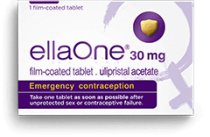
- Ulipristal acetate (such as ellaOne), which can be taken up to 120 hours (5 days) after unprotected sex.
- Levonorgestrel emergency contraception, which should be taken within 72 hours.
Both work by delaying or preventing ovulation so that sperm cannot fertilise an egg.
The sooner you take an emergency contraception pill, the more effective it is likely to be.
Copper coil as emergency contraception
The copper coil can also be fitted as emergency contraception within five days of unprotected sex. You need to have an appointment, as only trained healthcare professionals can fit this.
It’s the most effective form of emergency contraception available and can continue providing contraception for years afterwards if you choose to keep it in place
https://www.ellaone.co.uk/emergency-contraception/how-does-the-morning-after-pill-work/
Which contraception method lasts the longest?
The duration of each form of non-permanent contraception is as follows:
| Method | Protection |
|---|---|
| Copper coil | Up to 10 years (depending on type) |
| Hormonal coil | 3-8 years, depending on the type |
| Implant | Up to 5 years |
| Injection | 8-13 weeks |
| Patch | 1 week |
| Vaginal ring | 3 weeks |
| Pill | Daily use for ongoing protection |
| Condoms | One act of sex |
| Emergency contraception pill | Reduces the risk of pregnancy after one act of unprotected sex |
Where can I get contraception in the UK?
Most contraception is available free through the NHS. You can usually access contraception from:
- GP surgeries
- Sexual health clinics
- Community contraception services
- Some pharmacies
Emergency contraception, as well as daily contraception pills, are available from many pharmacies without an appointment.
If you’re considering ellaOne, you can buy it online for convenient, discreet home delivery or speak to a pharmacist in person if you’d prefer face-to-face advice.
Which contraception methods are hormone-free?
If you’d prefer to avoid hormones, several options are available.
Hormone-free contraception includes:
- Copper coil
- Male condoms
- Female condoms
- Diaphragm
- Cervical cap
- Fertility awareness methods
- Withdrawal method
- Sterilisation
If sterilisation isn’t an option for you right now, the copper coil is the most effective hormone-free option.
Which contraception protects against sexually transmitted infections?
Only condoms provide protection against most sexually transmitted infections. That’s why, even if you’re using another highly effective contraceptive method, healthcare professionals often recommend condoms if there’s a risk of STIs. It’s important to know your risks, so getting yourself and your partner tested regularly for STIs is a good way to stay safe. If you’re with a new partner and don’t know their sexual history, use condoms even if you’re using another method.
Frequently asked questions
Is one contraception method better than another?
No, not really. The best method depends on your health, lifestyle and personal preferences. What works well for one person may not be the right choice for someone else.
Do I need to use condoms if I’m using another contraceptive method?
If you or your partner could be at risk of sexually transmitted infections, you should still use condoms even if you’re using another form of contraception. Condoms are the only contraceptive method that helps protect against both pregnancy and most STIs.
Can I use emergency contraception as regular contraception?
No. Emergency contraception n’t meant for regular use. If you find yourself needing emergency contraception regularly, it’s worth discussing a regular or daily contraceptive method with your GP or pharmacist.
Is emergency contraception effective?
Yes. Emergency contraception is effective at reducing the chance of pregnancy. The copper coil is the most effective option, while emergency contraceptive pills are most effective when take as soon as possible after having unprotected sex.
Can I get pregnant straight after stopping contraception?
With most contraceptive methods, your fertility goes back to normal pretty quickly after you stop using them. The main exception is the contraceptive injection, where it can sometimes take several months before fertility returns to normal.
Do all contraception methods protect against STIs?
No. Only condoms help protect against most sexually transmitted infections. If STI protection is important, you should use condoms even if you’re using another contraceptive method.
What should I do if my contraception fails?
If you’ve had unprotected sex because your contraception failed, for example, a condom split or you missed a pill, you should consider emergency contraception as soon as possible. The sooner you act, the more effective the emergency contraception pill is likely to be. If you’re unsure what to do, speak to a pharmacist, GP or sexual health clinic for judgment-free advice.
Can I get contraception for free in the UK?
Yes. Most contraception is available free of charge through the NHS. You can access contraceptive services through your GP surgery, sexual health clinics and many community contraception services. Emergency contraception may also be available free of charge from participating high street pharmacies, through the new NHS Pharmacy Contraception Service, and through typical NHS services like GPs or sexual health clinics.
Contraceptive options made easy
With so many different types of contraception methods available, it’s never been easier to find an option that fits your lifestyle and family planning goals. Whether you want something long-lasting, a hormone-free option, or a reliable method that you can control yourself, there’s a contraceptive to suit almost every situation.
If you’ve had unprotected sex or your regular contraception has failed, remember that emergency contraception can help reduce your chance of pregnancy. The sooner you act, the more options are available to you.
If you need emergency contraception treatment, you can buy ellaOne online or from a local pharmacy, making it easy to access emergency contraception quickly when you need it most.
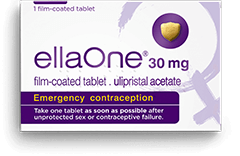

ellaOne® 30mg film-coated tablet contains ulipristal acetate and is indicated for emergency contraception within 120 hours (5 days) of unprotected sexual intercourse or contraceptive failure.
*Based on sales data. Verify at ellaone.co.uk/verify
Always read the instructions on the package leaflet carefully. Health information within this website is provided for educational purposes only and is not intended to replace discussions with healthcare professionals. All decisions regarding patient care must be made with a healthcare professional considering the unique characteristics of the patient.